Link to the original article is here, though you’ll have to pay for it. Featured image by senpatientulo. Follow for more of this artist’s work.
Gustavo Arellano wrote a piece published in the LA Times that I found through a friend of mine on Facebook. Having a chance to read the article, I will leave my impressions below.
I thought the article was interesting, though it reads more like an opinion piece to me than actual news. Arellano makes some points that I do agree with, but I think he makes a caricature of the OC sheriffs rather than trying to genuinely view their perspective. I will expand upon that later in this post.
For context, California Governor Gavin Newsome implemented a new round of lockdown orders in the state of California to combat rising levels of Covid-19 cases and hospitalizations. The ICU levels are dropping into concerning territory, with zones that fall below 15% available capacity becoming subject to these new lockdown orders. The current tier assignments are below:

The current orders as of December 8, 2020 affect 99.9% of Californians. The stay at home orders, however, are broken down into five regions, which can be seen here:
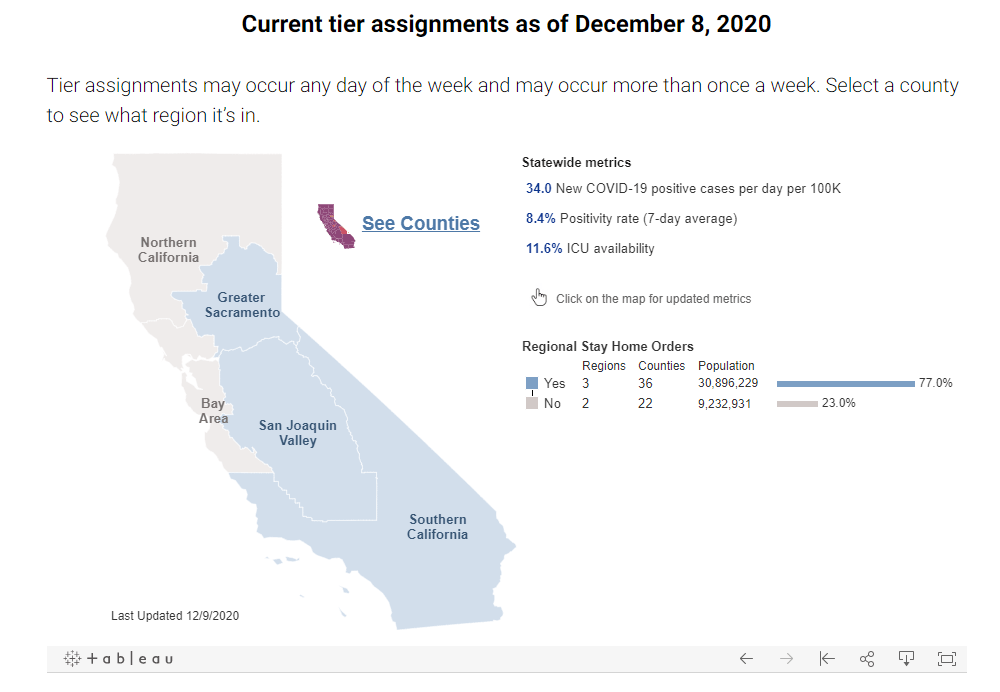
These regional stay at home orders affect over 75% of Californians. The first stay at home orders were issued March 19th, nearly nine months ago according to Calmatters.org. And, according to CNBC and Yelp, 60% of businesses across the US that were temporarily closed have become permanent since March 1st.
Outside of the pandemic, California like many other states, has been facing the Defund the Police movement, along with BLM, Antifa, and protests of the lockdowns. Law enforcement has been used in many different ways during this time, as enforcers of the various and ever shifting directives coming from the various state and local authorities, as a scapegoat for more nebulous and difficult to define concepts as institutional racism, and as a peace keeping force. This mixed messaging has resulted in funding for various police departments across the state to be cut, reduced, or redirected. The tools at the disposal of officers have come under fire as well, and more and more officers are finding themselves with fewer acceptable options available to them in their various interactions with a public that has some who are willing to do very unkind things to them to put it mildly.
Considering the myriad of things that law enforcement has to deal with, some sheriffs are opting not to strictly enforce the newest lockdown mandates coming from Newsome. Orange County Sheriff Don Barnes made public comments that his deputies would not criminally enforce the mandates. According to The Orange County Register, Barnes commented that “You can’t arrest your way through a pandemic.” This is certainly backed up by California’s decision to release prisoners during the summer as cases rose. This decision created another problem within the county jail systems, per capradio.org. And the matter is further complicated by Governor Newsome and other officials not following the recommendations they have set for others.
The virus is a problem. It is deadly and transmissible. It has infected over 15 million people in the US per Worldometer. Cases continue to rise during the winter as people take shelter inside their homes, going out to fewer places in part due to the weather, and in part due to the various shutdowns limiting the number of places where we can go. Most people have been following as best as they can, complying with mask mandates, adjusting their behaviors, limiting their gatherings, working from home where they can, and trying to stay informed about the virus. But in a society that is dominated by clickbait articles and bumper sticker slogans, we haven’t yet found a way to convey that this long-term problem isn’t just going to magically disappear if we don a mask or wash our hands.
Don Barnes is correct to assert that compliance with the orders is a matter of personal responsibility. No amount of coercion makes a difference to someone determined to do a thing. the various mandates, recommendations, and directives are intended to be disincentives for certain behaviors, backed up by the enforcement mechanisms of the police. But as these lockdowns continue with little help coming from local, state and federal resources, people’s patience and bank accounts are running out. There is a growing frustration with the shutdowns, and a growing sense that the government, with all of its good intentions and desire to prevent death, simply can’t follow through on those promises. We ceded our liberties with the promise and expectation that they would be returned to us in fifteen days. We’ve nearly exceeded that number eighteen times.
People need to be responsible. But to be responsible, they need to be informed. Our elected officials are failing in their job to convey the risk to the population for fear they may downplay the risk to some, and in doing so put others at risk. They are making decisions based on the needs of the most at-risk and vulnerable, which has deep and long lasting consequences for everyone else.
If the data is supposed to drive the decisions, then publish the data and help explain it to those who don’t understand it. Inform and ask the American people to rise to the occasion. If Newsome wants compliance, he should lead by example. But to expect the local authorities to go a small business that is struggling to stay afloat after months of no aid, to look into the ever increasingly desperate faces of people just trying to make a living and tell them they are non-essential has become more than some can take.

 A Place 4Politics